

There is no single cleaning schedule that works for every building.
A quiet residential property, a busy shopfront and a commercial site beside a main road can all collect dirt at very different rates.
For properties across Essex, the right exterior cleaning frequency depends on the surface, location, foot traffic, surrounding trees, weather exposure and the type of staining present.
Rather than waiting until an exterior looks heavily neglected, regular inspection can help property owners identify moss, algae, dirt and staining before the build-up becomes more difficult to deal with.
This guide explains what to look for, which exterior surfaces may need attention and when professional cleaning may be worth considering.
Quick Answer: How Often Should a Building Exterior Be Cleaned?
Most buildings do not need to follow a fixed cleaning date.
The better approach is to inspect exterior surfaces regularly and arrange cleaning when dirt, algae, moss, staining or heavy traffic starts affecting the appearance or usability of the area.
A property in a sheltered residential location may stay clean much longer than a shop, school, pub or commercial entrance exposed to constant foot traffic and road dirt.
The main factors include:
- Property location
- Level of traffic
- Surrounding vegetation
- Shade and moisture
- Surface material
- Previous cleaning
- Weather exposure
- Type of staining
Why Do Building Exteriors Become Dirty?
Exterior surfaces are constantly exposed to the environment.
Over time, this can leave visible marks from:
- Dirt
- Algae
- Moss
- Traffic film
- Bird mess
- Leaves
- Organic growth
- Weathering
- Pollution
- General foot traffic
The type of contamination matters because not every surface should be cleaned in exactly the same way.
A professional exterior cleaner should assess the surface and its condition before choosing an appropriate cleaning method rather than simply using maximum pressure on every job.
Send your postcode and a few details, or call the Maddins team.
1. Commercial Building Entrances
Entrances are often one of the first parts of a property to show dirt.
Customers, employees, deliveries and general foot traffic can quickly affect:
- Paving
- Concrete
- Steps
- Walkways
- Entrance areas
- Surrounding walls
For customer-facing businesses, a clean entrance can also contribute to a better first impression.
High-traffic sites may therefore need to be checked more often than areas that receive little use.
2. Car Parks and Forecourts
Commercial car parks and forecourts can collect:
- Tyre marks
- Dirt
- Organic growth
- Traffic film
- General grime
How quickly this happens depends heavily on the number of vehicles using the site.
A small private car park and a busy commercial forecourt should not automatically follow the same maintenance schedule.
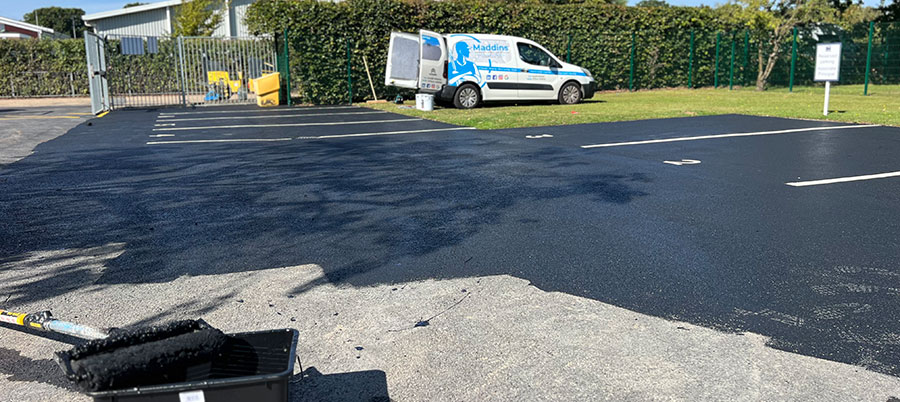
Maddins provides professional commercial exterior cleaning in Essex for car parks, forecourts, paths, yards and other high-traffic exterior areas.
3. Brickwork and Exterior Walls
Brickwork can gradually lose its appearance as dirt and organic growth accumulate.
Common signs that cleaning may be worth considering include:
- Green growth
- Dark staining
- Dirt around lower wall areas
- Weather-related discolouration
- Staining near paths and driveways
The correct cleaning method depends on the brick condition and the type of staining.
This is important because older or more delicate masonry may require a different approach from modern hard surfaces.
Can Brickwork Be Pressure Washed?
Sometimes, but not every wall should automatically be cleaned using high pressure.
The surface condition, age of the brickwork, pointing and type of contamination should all be considered first.
Professional assessment helps determine whether controlled pressure or another cleaning approach is more suitable.
4. Cladding
Cladding is commonly found on commercial buildings, industrial units and modern properties.
Over time it can collect:
- Dust
- Traffic film
- Algae
- Atmospheric dirt
- Water marks
A building beside a busy road may show dirt much sooner than one in a quieter location.
Because cladding materials and finishes vary, the cleaning method should be matched to the specific surface.
5. Paths and Walkways
Paths can become noticeably dirty because of regular foot traffic and moisture.
Areas that stay shaded can also develop algae or moss more quickly.
Signs that a path may need cleaning include:
- Green surface growth
- Dark staining
- Accumulated dirt
- Moss around joints
- Areas becoming noticeably slippery when wet
Busy commercial walkways may need attention sooner than private garden paths.
6. Rooflines and Gutters
The roof itself is not the only exterior area that should be monitored.
Gutters can collect leaves, moss and other debris, particularly around properties surrounded by trees.
Maddins also provides professional roof and gutter cleaning for properties across Essex, with the cleaning method chosen according to the roof type and condition.

7. Areas Around Trees and Vegetation
Properties surrounded by trees or dense vegetation may experience faster organic build-up.
Shaded surfaces tend to remain damp for longer, creating conditions in which moss and algae can become more noticeable.
This commonly affects:
- Paths
- Patios
- Paving
- Walls
- Roof areas
- Gutters
These areas may therefore need more frequent inspection than open, sunny surfaces.
8. North-Facing and Shaded Areas
One part of a building can become dirty much faster than another.
A sunny entrance may stay relatively dry while a shaded side path develops green growth.
This is why it often makes more sense to assess individual surfaces rather than automatically cleaning every part of the property at the same time.
Does Every Surface Need Pressure Washing?
No.
One of the most important parts of exterior cleaning is choosing a method suitable for the surface.
Depending on the material and condition, cleaning could involve:
- Controlled pressure washing
- Power washing
- Hot pressure cleaning
- Soft washing
- Targeted treatment
- Careful rinsing
Using excessive pressure on the wrong surface can cause unnecessary damage.
The cleaning method should therefore be based on the surface rather than using one approach for every job.
Pressure Washing vs Soft Washing
These terms are sometimes used interchangeably, but they are not exactly the same.
Pressure Washing
Pressure washing uses water pressure to lift dirt and contamination from suitable hard surfaces.
It may be appropriate for areas such as:
- Concrete
- Some paving
- Suitable block paving
- Hardstanding
- Some commercial surfaces
Soft Washing
Soft washing uses a gentler cleaning approach and may be more appropriate where high pressure is unnecessary or unsuitable.
Which option is better depends on the material and condition of the surface.
Signs Your Building Exterior May Need Cleaning
Instead of relying only on a calendar, look for visible signs.
Consider arranging an inspection if you notice:
- Green algae
- Moss
- Black or dark staining
- Dirty shop or business entrances
- Tired-looking brickwork
- Heavily stained paths
- Debris around rooflines
- Blocked or overflowing gutters
- Dirty cladding
- Slippery paved areas
The earlier build-up is identified, the easier it is to decide on an appropriate maintenance approach.
Residential vs Commercial Exterior Cleaning
Residential and commercial properties often have different requirements.
| Residential Properties | Commercial Properties |
| Generally lower foot traffic | Often higher foot traffic |
| Smaller exterior areas | Can include larger sites |
| Driveways and patios common | Car parks and forecourts common |
| Cleaning often appearance-led | Appearance and site maintenance |
| Flexible scheduling | May need cleaning around trading hours |
Commercial work may also require cleaning to be planned around staff, customers and site operations.
For many sites, cleaning can be scheduled to help minimise disruption to normal business activities.
Does Weather in Essex Affect Exterior Cleaning?
Weather exposure can influence how quickly exterior surfaces become dirty.
Rain, shade, damp conditions and vegetation can all contribute to visible organic growth.
However, location within Essex matters too.
A property beside a busy road may experience different contamination from a residential home surrounded by trees.
That means cleaning frequency should be based on the actual property rather than a generic national timetable.
Exterior Cleaning for Properties Across Essex
Maddins Jet Washing Services provides exterior cleaning across Essex, including areas such as:
- Wickford
- Basildon
- Billericay
- Brentwood
- Chelmsford
- Southend-on-Sea
- Rayleigh
- Benfleet
- Maldon
- Witham
- Braintree
- Colchester
Whether you manage a commercial property or want to improve the exterior appearance of your home, the correct cleaning approach should depend on the surface, condition and type of build-up present.
How Should You Plan Exterior Cleaning?
A simple maintenance approach is:
1. Inspect
Check exterior walls, paving, roofs, gutters, entrances and other exposed surfaces.
2. Identify the Problem
Determine whether you are dealing with dirt, moss, algae, staining or another form of build-up.
3. Check the Surface
Brick, cladding, concrete, natural stone and roof tiles may require different methods.
4. Choose the Cleaning Method
Use a cleaning approach suitable for the surface and its condition.
5. Review Afterwards
After cleaning, monitor how quickly dirt or organic growth returns.
This helps establish a maintenance pattern appropriate for that individual property.
How Often Should Commercial Properties Be Checked?
There is no universal rule.
Properties with:
- High foot traffic
- Heavy vehicle use
- Shaded areas
- Nearby trees
- Busy road exposure
- Customer-facing entrances
will often need closer monitoring than low-traffic sites.
For businesses, it can be helpful to assess exterior areas periodically rather than waiting for heavy visible build-up.
Need Professional Exterior Cleaning in Essex?
If dirt, algae, moss or staining is starting to affect your building exterior, Maddins Jet Washing Services can assess the surface and recommend an appropriate cleaning method.
Whether you need residential exterior cleaning, commercial pressure washing or professional roof and gutter cleaning, Maddins provides services across Essex and surrounding areas.

