

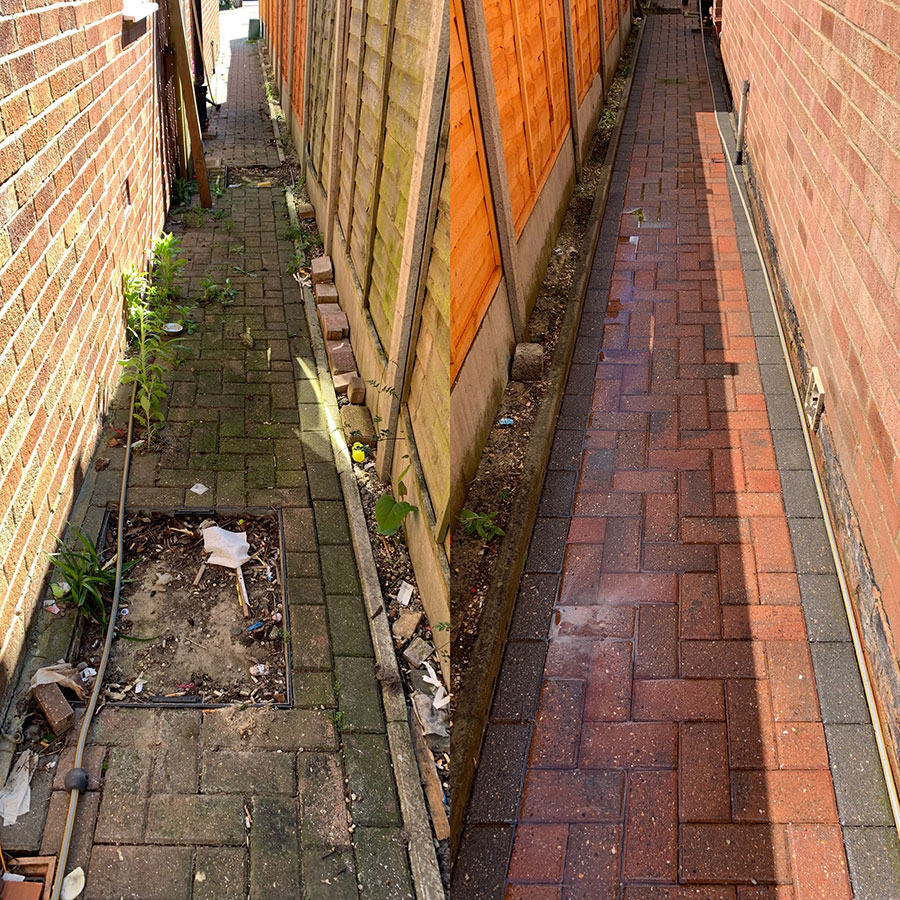
Cleaning block paving can completely change the appearance of a driveway, patio or path.
But once the surface has been pressure washed, many homeowners ask the same question:
Should block paving be sealed after cleaning?
The short answer is: not always.
Sealing can be useful for some block paved surfaces, but the paving needs to be properly cleaned, inspected and prepared first. In many cases, re-sanding the joints is also an important part of the process.
Whether sealing is worthwhile depends on the condition of the paving, how the area is used and what result you want to achieve.
This guide explains what happens after block paving is cleaned, when re-sanding may be required and when sealing could be worth considering.
Quick Answer: Does Block Paving Need Sealing After Pressure Washing?
No, block paving does not automatically need to be sealed every time it is pressure washed.
However, cleaning can remove some of the jointing sand between paving blocks. Those joints should be checked and topped up where necessary before considering a sealant.
A suitable paving sealant can provide additional protection and help stabilise jointing sand, but it must be compatible with the paving and applied to a properly prepared, dry surface. Paving Expert
For homeowners who simply want a cleaner driveway or patio, professional cleaning and appropriate re-sanding may be enough.
What Happens to Block Paving During Pressure Washing?
Block paving contains joints between each individual block.
These joints are normally filled with jointing sand.
During cleaning, dirt, moss, algae and weeds can be removed from the paving. Some jointing sand may also be displaced depending on the condition of the surface and the cleaning method used.
That is why cleaning block paving should involve more than simply pointing a pressure washer at the surface.
The condition of the blocks and joints should be checked afterwards.
If the joints have lost sand, they may need to be re-filled. Marshalls notes that maintaining the jointing sand is important for the stability of block paving. marshalls.co.uk
Send your postcode and a few details, or call the Maddins team.
What Is Re-Sanding Block Paving?
Re-sanding means replacing jointing sand that has been lost from between the paving blocks.
After the surface has been cleaned and dried sufficiently, suitable jointing sand can be swept back into the joints.
This helps restore the joints following cleaning.
Re-sanding is particularly relevant where pressure cleaning has removed existing jointing material. Specialist paving guidance similarly recommends topping up joints after cleaning where sand has been lost. Paving Expert
Signs your block paving may need re-sanding include:
- visibly empty joints
- low sand levels between blocks
- loose jointing material
- weeds previously growing heavily between blocks
- substantial sand removed during cleaning
The paving should be assessed after cleaning rather than assuming every area needs exactly the same treatment.
What Does Block Paving Sealer Do?
A block paving sealer is applied to the surface after the paving has been properly prepared.
Depending on the product, sealing may help:
- protect the surface from some staining
- stabilise jointing sand
- make future maintenance easier
- enhance the appearance of the paving
- reduce the amount of jointing sand lost over time
Different sealers create different finishes.
Some aim to leave a more natural appearance, while others can create a darker or “wet look” finish.
It is therefore important to choose a product specifically suitable for the type of paving being treated rather than assuming every paving sealer works on every surface. Paving Expert
Is Sealing Block Paving Necessary?
No.
Sealing is an optional maintenance step for many domestic block paved surfaces.
A driveway can still be professionally cleaned and maintained without applying a sealer afterwards.
The decision usually depends on factors such as:
- paving condition
- age of the surface
- level of traffic
- likelihood of staining
- desired appearance
- maintenance expectations
- type of block paving
For some homeowners, cleaning and re-sanding provides the result they want.
Others may prefer the additional protection or appearance offered by a suitable sealer.
Even specialist paving guidance notes that the value of sealing domestic block paving depends on the particular surface and homeowner’s goals rather than being essential in every case. Paving Expert
Benefits of Sealing Block Paving
1. Helps Protect Against Staining
Driveways are exposed to vehicles, dirt and everyday contamination.
A suitable sealant can make some forms of staining less likely to penetrate directly into the paving.
This does not mean the surface becomes maintenance-free.
Spills and staining should still be dealt with as soon as practical.
2. Helps Stabilise Jointing Sand
One reason people choose to seal block paving is to help keep jointing sand in place.
This can be particularly useful in areas exposed to regular cleaning, traffic or surface water.
Quality sealants can bind the jointing sand and reduce erosion from the joints. Paving Expert
3. Can Improve Appearance
Cleaning alone can significantly brighten tired paving.
Sealing may further change the appearance depending on the product used.
Some sealers enhance colour, while others are designed to maintain a more natural finish.
Always understand what the finished surface is expected to look like before choosing a product.
4. May Make Future Maintenance Easier
A properly sealed surface can be easier to maintain in some circumstances because contaminants may be less likely to penetrate deeply into the paving.
However, sealing does not stop a driveway or patio from becoming dirty.
Leaves, algae, traffic film and general outdoor dirt can still accumulate.
Regular maintenance remains important.
When Should You NOT Seal Block Paving?
Sealing should not simply be applied because a surface has just been pressure washed.
There are situations where sealing should be delayed or may not be appropriate.
The Paving Is Still Wet
Moisture trapped beneath or within the surface can cause problems with some sealers.
The paving needs sufficient drying time before sealing, and the manufacturer’s application instructions should always be followed.
Specialist paving guidance strongly emphasises that paving and jointing should be thoroughly dry before sealant application. Paving Expert
The Surface Is Still Dirty
Applying sealer over:
- dirt
- algae
- moss
- staining
- debris
can effectively lock the problem into the finished surface.
Cleaning and preparation therefore come first.
The Jointing Sand Has Not Been Checked
If cleaning has removed jointing sand, the joints should be inspected and restored as appropriate before the sealing stage.
Sealing should not be treated as a replacement for proper preparation.
The Wrong Sealer Has Been Selected
Not every sealant is suitable for every type of paving.
Different concrete blocks, clay pavers and other materials can respond differently.
Using the wrong product can change the appearance of the paving or create an undesirable finish.
A small test area and the product manufacturer’s instructions are sensible precautions. Paving Expert
How Long After Pressure Washing Should Block Paving Be Sealed?
There is no single drying time suitable for every job.
Weather, temperature, shade, joint depth and the amount of water used during cleaning can all affect drying.
The key point is that the paving should be properly dry before a compatible sealant is applied.
Do not assume that because the top of the blocks looks dry, the joints and paving underneath are ready.
Some specialist guidance recommends allowing several days or longer depending on conditions, while individual sealant manufacturers may specify their own requirements. Paving Expert
Always follow the instructions for the particular product being used.
Does Block Paving Need Re-Sanding Before Sealing?
Where jointing sand has been removed or reduced during cleaning, the joints should normally be restored before sealing.
Think of the process as:
Clean → Inspect → Dry → Re-sand where required → Assess for sealing
rather than:
Pressure wash → immediately apply sealer
Correct preparation is one of the most important parts of getting a good result.
Can You Pressure Wash Block Paving Without Damaging It?
Block paving can often be pressure washed successfully when the equipment and technique are appropriate for the condition of the surface.
However, excessive pressure or poor technique can unnecessarily remove jointing material or affect vulnerable areas.
Professional cleaning should take into account:
- condition of the blocks
- condition of the joints
- staining
- moss and algae
- drainage
- surface age
- previous treatments
Maddins provides professional driveway cleaning and block paving cleaning in Essex with the cleaning approach selected around the surface condition. The existing driveway service also includes advice on re-sanding and surface protection after cleaning. Maddins Jet Washing Services
What About Block Paved Patios and Paths?
Block paving is not only used for driveways.
It is also common on:
- patios
- garden paths
- entrances
- seating areas
- walkways
Patios often face slightly different conditions from driveways.
They may receive less vehicle traffic but more shade, vegetation, moisture and organic growth.
Areas around gardens can therefore develop algae and moss even when there is very little physical wear.
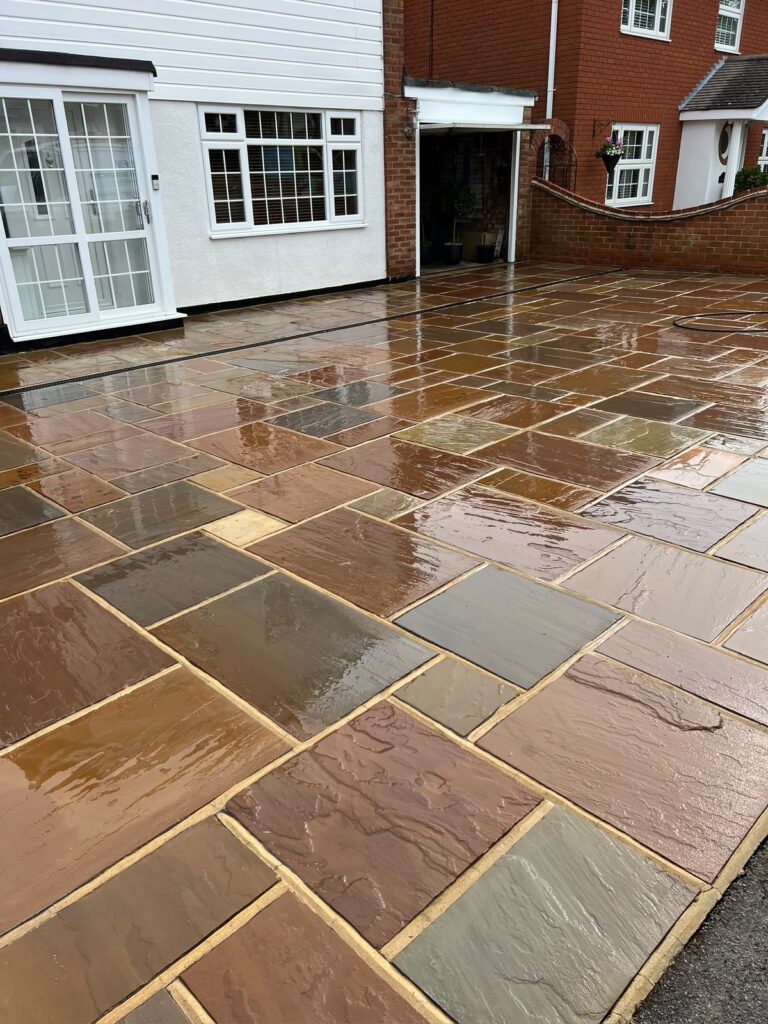
Maddins also provides patio and block paving cleaning in Essex for garden paving, patios, paths and other outdoor surfaces. Maddins Jet Washing Services
Why Does Block Paving Turn Green?
Green block paving is commonly associated with algae and other organic growth.
It tends to become more noticeable in locations that remain damp or shaded.
Common contributing factors include:
- surrounding trees
- poor sunlight
- damp weather
- north-facing areas
- leaves and organic debris
- limited airflow
A shaded garden path may therefore become green much faster than an open driveway receiving direct sunlight.
Why Do Weeds Grow Between Block Paving?
Weeds can establish themselves in the joints where seeds and organic material collect.
Over time, dirt and debris can provide conditions for growth.
Regular sweeping, cleaning and maintaining the joints can help keep the paving looking tidier.
A heavily neglected area may require weed removal as part of the cleaning and maintenance process.
How Often Should Block Paving Be Cleaned?
There is no universal schedule.
Some driveways and patios stay relatively clean for long periods, while others quickly develop:
- green algae
- moss
- weeds
- tyre marks
- general dirt
- staining
A better approach is to inspect the surface periodically.
Cleaning may be worth considering when build-up becomes clearly visible or the paving starts to look dull, heavily stained or slippery.
Block Paving Cleaning vs Sealing
The two services are related but they are not the same.
| Block Paving Cleaning | Block Paving Sealing |
| Removes surface dirt and organic growth | Adds a protective surface treatment |
| Can improve appearance immediately | May help protect the cleaned finish |
| Often requires joint inspection afterwards | Requires appropriate preparation |
| Suitable without sealing afterwards | Optional for many domestic surfaces |
| May remove some jointing sand | Can help stabilise jointing sand |
For many properties, professional cleaning is the main requirement.
Sealing is an additional decision that should be based on the surface and the homeowner’s priorities.
Should You Seal an Old Block Paved Driveway?
Age alone does not determine whether a driveway should be sealed.
The condition of the paving is more important.
Before sealing an older driveway, check for:
- sunken areas
- loose blocks
- damaged blocks
- poor joints
- staining
- oil contamination
- excessive weeds or moss
Any repairs or cleaning should normally be dealt with before applying a surface treatment.
A tired driveway may benefit much more from proper cleaning, repairs and re-sanding before sealing is even considered.
Is Block Paving Sealing Worth It?
It can be, but not for every property.
Sealing may be worth considering if you:
- want additional surface protection
- want to stabilise jointing sand
- prefer the appearance produced by a particular sealer
- have an area exposed to frequent staining
- want a more complete paving refurbishment
You may decide against sealing if you simply want the paving professionally cleaned and restored to a tidy condition.
There is no need to add a treatment purely because the surface has been pressure washed.
Need Your Block Paving Professionally Cleaned?
If your driveway, patio or path has become covered in dirt, moss, algae or weeds, Maddins Jet Washing Services can assess the surface and recommend an appropriate cleaning approach.
For block paved driveways:
For patios, paths and garden paving:
VIEW PATIO & BLOCK PAVING CLEANING

