

You can approach light block-paving dirt without a pressure washer by sweeping loose debris, following the paving manufacturer’s routine-care instructions and using gentle cleaning where suitable. Stubborn stains, loose blocks and damaged joints are reasons to stop and seek advice rather than scrub harder or experiment with stronger chemicals.
This guide focuses on routine cleaning block paving without powered washing. Our existing article explains re-sanding and optional sealing after pressure washing. If the surface needs more than ordinary upkeep, Maddins can assess a suitable professional approach.
Send your postcode and photographs of the surface and marks. We can discuss what is suitable before you choose a method.
Check the paving and its care instructions first
Locate any installer or product information, including an existing sealer. Marshalls’ maintenance guide supports basic routine care and a small trial before a wider cleaning treatment. Use instructions appropriate to your paving rather than assuming all concrete, clay and permeable systems are maintained identically.
Look for rocking blocks, broken edges, empty joints and areas where water collects. Do not try to wash away a physical defect. Photograph the concern and seek an appropriate assessment if the surface is unstable or the drainage appears to be failing.
- Identify the paving product or say that it is unknown.
- Check whether it has a coating or previous treatment.
- Note loose blocks, damaged joints and areas that need repair.
- Choose a small manageable area rather than starting the whole drive at once.
Step 1: sweep loose material from the surface
For ordinary loose leaves and debris, begin with a suitable broom used gently on the surface. Collect the swept material rather than pushing it into drains or planted areas. Do not use a wire brush or scrape aggressively across an unknown finish.
Work in short sections so you can see the condition underneath. If sweeping exposes loose paving, failing edges or an unexpected coating, stop and review the plan. The aim is ordinary upkeep, not removing the surface layer to create a new colour.
Check the edges and spaces around pots or furniture without unsafe lifting. Heavy planters can be left for a separate handling discussion. Mention inaccessible areas if you later request professional cleaning so the quotation reflects what can be reached.
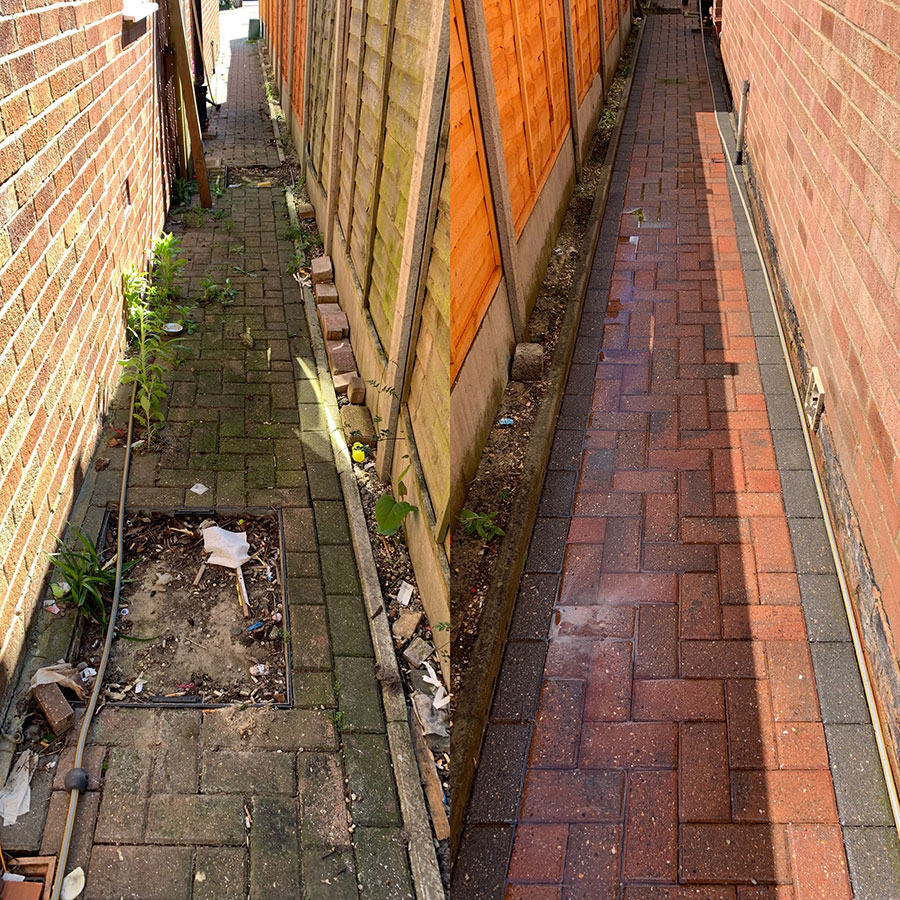
Step 2: choose only material-compatible gentle cleaning
Follow the paving or sealer manufacturer’s instructions for routine washing. If a compatible cleaner is recommended, follow its label, including any protection, dilution and rinsing requirements. Do not mix products or adopt a bleach, acid or vinegar recipe for an unidentified surface.
Try the permitted method on a small inconspicuous section first and assess the result before expanding. Use a suitable non-abrasive brush rather than assuming more vigorous scrubbing is harmless. If the product information does not cover your particular paving, ask the supplier or a cleaner before proceeding.
| Problem | Gentle first decision | Reason to stop |
|---|---|---|
| Loose leaves and surface debris | Sweep and collect material. | Blocks or edging move during ordinary brushing. |
| Light routine dirt | Follow the material’s routine-care instructions. | The finish changes or joints deteriorate. |
| Unknown dark stain | Record the mark and its history. | Its cause or product compatibility is unclear. |
| Deep-rooted growth or empty joints | Ask for a suitable assessment. | Removing it would disturb paving or joint material. |
Step 3: rinse as instructed and review the dry surface
Use only the rinsing method suitable for the material and any product actually used. Keep the working area clear while it is wet and avoid directing loosened material towards drains. If there is contamination or you do not know how to manage the wash water, get advice before washing.
Review the result when the surface is dry. Wet paving can look darker and may hide a remaining mark. A consistent improvement in loose dirt is a different goal from eliminating oil, changing a weathered colour or repairing damage.
Show us the dry surface and describe anything already applied. We will discuss whether a targeted treatment or professional clean is appropriate.
When should you stop and ask for a professional assessment?
Stop if the paving material is uncertain, a treatment affects the finish, joints are failing or a stain has no clear cause. Do not respond by combining chemicals or repeatedly scrubbing a weakening area. An appropriate clean starts by understanding what is there.
A professional enquiry should distinguish general grime from specific stains and defects. Include the likely age and source of a mark, previous products and the whole area you want considered. Ask what improvement is realistic; general cleaning cannot promise to remove every absorbed stain.
If a powered method is proposed, discuss suitability, joints and aftercare before booking. Conventional sand-jointed blocks and permeable paving may require different joint material. The existing sealing guide covers those aftercare decisions without making a coating compulsory.
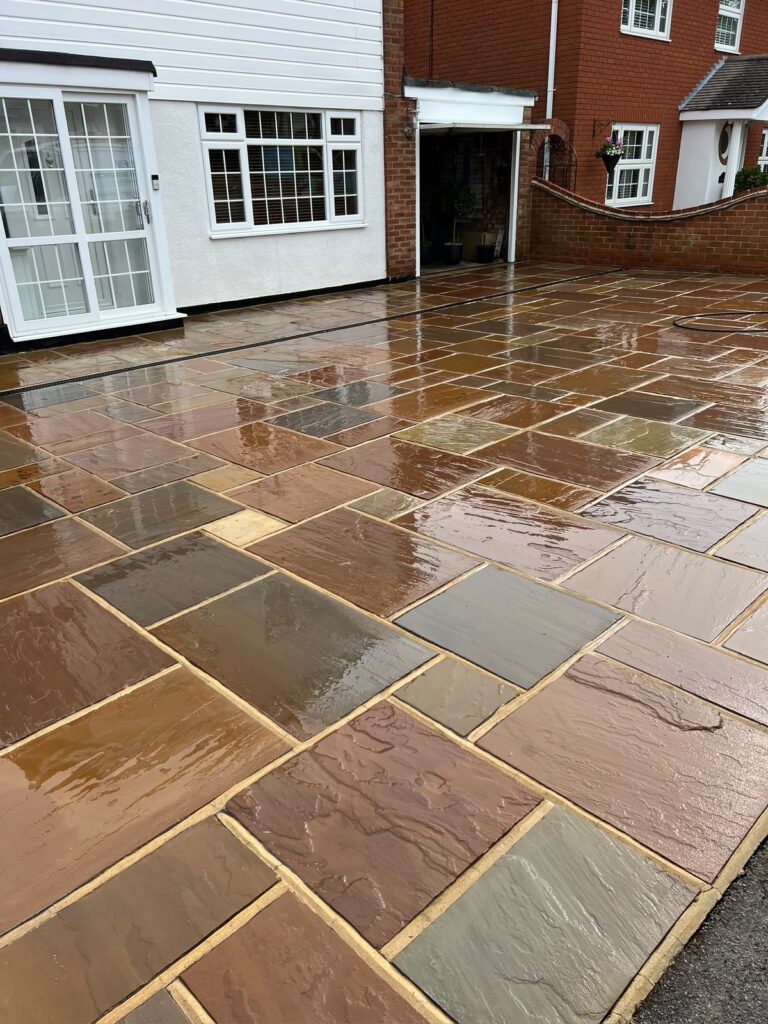
Arrange suitable block-paving cleaning in Essex
Maddins offers driveway cleaning and patio and block-paving cleaning from Wickford. Coverage includes Braintree, Billericay and other Essex towns listed in our coverage hub. Availability is confirmed for the property postcode.
Select Driveway Cleaning in the form below for a drive, or choose Patio Cleaning for a garden area. Include photographs of the joints, overall surface and any products already used. We will discuss the method, practical arrangements and a clear quote before booking.
Sources and further reading
Marshalls: gardens and driveways cleaning and maintenance guide. General guidance supports this article; suitability and the agreed work depend on the individual property. Original photographs are supplied by Maddins and are not attributed to a town unless documented.

